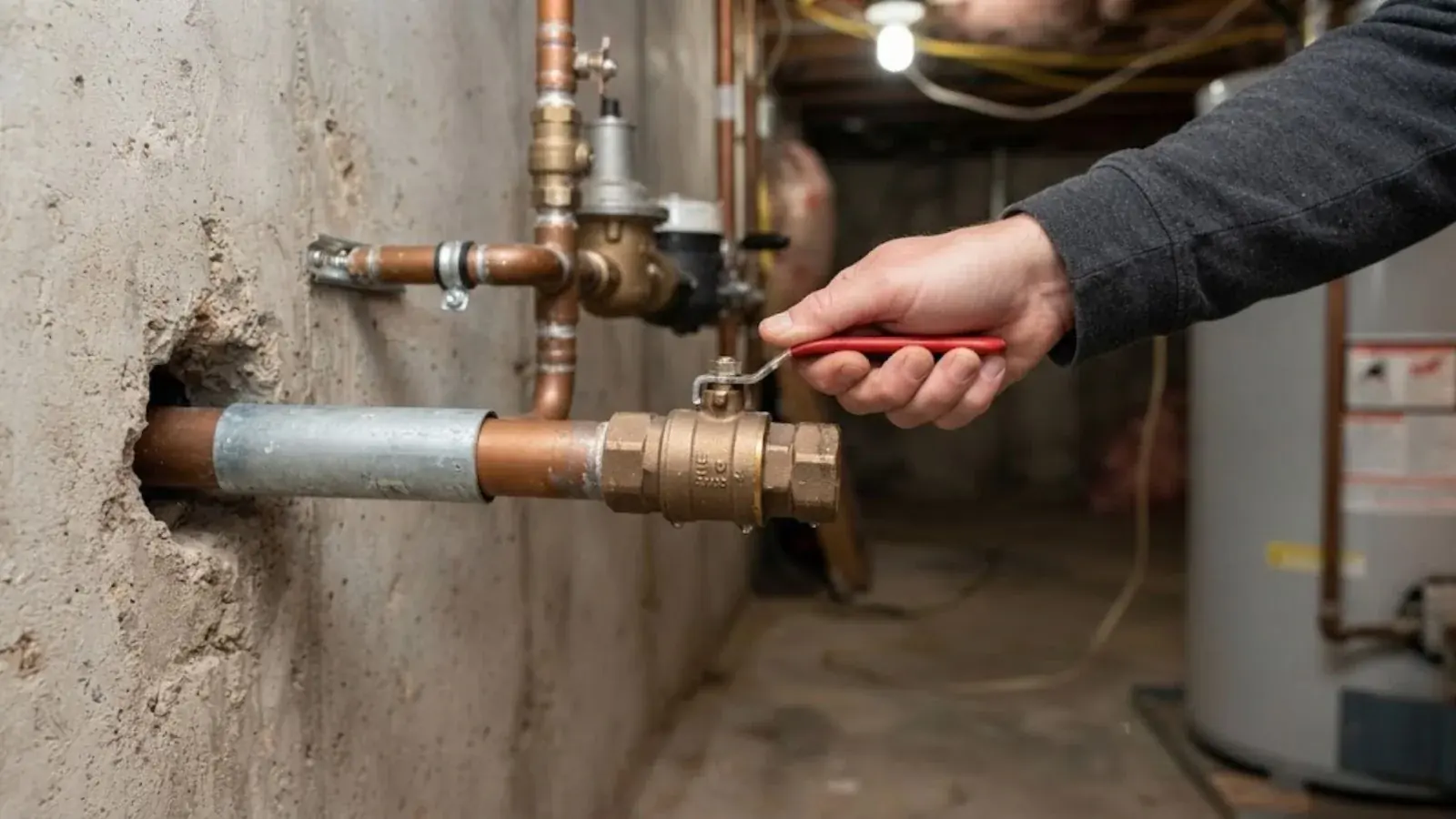
The main water shutoff in most Bedford homes is on the water line where it enters the house. Common spots are near the water heater, in a garage along the front wall, in a utility closet or on an outside wall under a hose bib. A second valve, the city shutoff, sits in the meter box near the street, and you should leave that one to a plumber or the city if possible.
Find the valve now, while nothing is wrong. Test it once a year. A valve that has not moved in years can seize, and you do not want to discover that when water is pouring from a pipe.
Where to look inside the house
Near the water heater
Plumbers often tie in the main near the heater. Look at the cold line entering the tank and follow it back.
Garage front wall
On slab homes the line often enters the garage. Look low on the wall facing the street.
Utility closet or laundry room
A valve behind the washer or on a wall near the laundry is common.
Under a sink or in a crawl space
Less common, but worth checking in older or custom homes.
You are looking for a valve on the pipe that comes in from outside. It may have a round wheel handle or a lever. Trace the pipe from the wall where it enters toward the first valve you find.
Gate valves and ball valves
A round handle is usually a gate valve. It turns many times clockwise to close. These valves are older and can seize or leak at the stem. A lever handle is a ball valve and closes with a quarter turn, which is much more reliable. If you have a gate valve, ask a plumber about replacing it with a ball valve.
| Type | How it closes | Notes |
|---|---|---|
| Round wheel handle. | Turn clockwise several times. | Older gate valve, can seize. |
| Lever handle. | Quarter turn. | Ball valve, more reliable. |
| Meter box valve. | Turn with a meter key or wrench. | City side, use with care. |
Valve stuck or missing?
A plumber can free it or replace it.
How to test the valve
Close it slowly
Turn it clockwise until it stops, without forcing it.
Open a faucet
Open the lowest tap in the house to see if water stops.
Check for leaks
Look at the valve stem for dripping while it is closed.
Reopen it
Turn it back fully, then run a faucet to clear the air.
If water keeps running after you close the valve, either the valve is failing or a second line feeds the house. Note it and call a plumber. If the valve will not move, do not use a pipe wrench or a cheater bar, because you can snap the stem.
The meter side in Bedford
The City of Bedford owns the meter, and the Water Billing page links a Water Meter Shut Off Assistance option for utility billing questions. Ask the city about its rules before you use the meter shutoff yourself.
The page also links an EyeOnWater sign-up for usage tracking, which can help you spot a leak after the water is back on.
Source: City of Bedford Water Billing page (bedfordtx.gov/203).
Make it easy for anyone to find
Tag the valve with a bright label so a guest, a house sitter or a family member can find it. Keep the area around it clear. Take a photo of it and save it on your phone along with the location of the meter and the water heater shutoff.
Also find the shutoff valves under each sink and behind each toilet. Those small valves isolate a single fixture and let you fix a problem without closing the whole house.
Other valves worth knowing
The main is not the only valve that matters. The water heater has a cold supply valve, and each sink and toilet has its own small shutoff. The washing machine has two valves behind it. Outside, each hose bib may have an interior shutoff in the garage or a closet. Knowing these makes small repairs far easier.
Walk through the house with a flashlight and note each one. Turn each valve once to be sure it moves. Replace any that will not close or that drip from the stem.
A one-page emergency card
Write this down and tape it inside a cabinet
- The location of the main shutoff, with a photo.
- The location of the water heater shutoff and the breaker or gas control.
- The location of the meter box.
- The number of your plumber and your insurance agent.
- A reminder to close the main first and call second.
If you rent, ask the landlord or property manager where the main is and write it down. If you live in a condo or townhome, the main may be shared, and the shutoff for your unit may sit in a closet or a common utility room. Ask the association before a problem happens.
Practice once with the whole family. A shutoff that only one person can find is a weak plan.
After a repair, do not forget to reopen the valve fully. A valve left half open can reduce pressure and wear the seat. Turn it until it stops, then back it off a quarter turn if it is a gate valve so it does not jam in the open position.
If you ever replace the valve, ask for a full-port ball valve rated for potable water. It closes with a quarter turn and rarely seizes.
If something has already failed
For a pipe that has burst, see burst pipe repair. A leak you cannot find belongs with leak detection. A stuck valve you want replaced is a job for plumbing installation.
We also help neighbors in Hurst.
Main shutoff questions
Often near the water heater, in the garage or in a utility closet. Trace the line from where it enters the house.
Use the house valve first. The meter valve belongs to the city side, so ask before you use it.
Old valves can seize. Do not force it. A plumber can free it or replace it.
Once a year is a good habit. Close it, open a faucet and reopen it.
If the heater is leaking or the water is off, turn off power or gas to avoid running it dry.