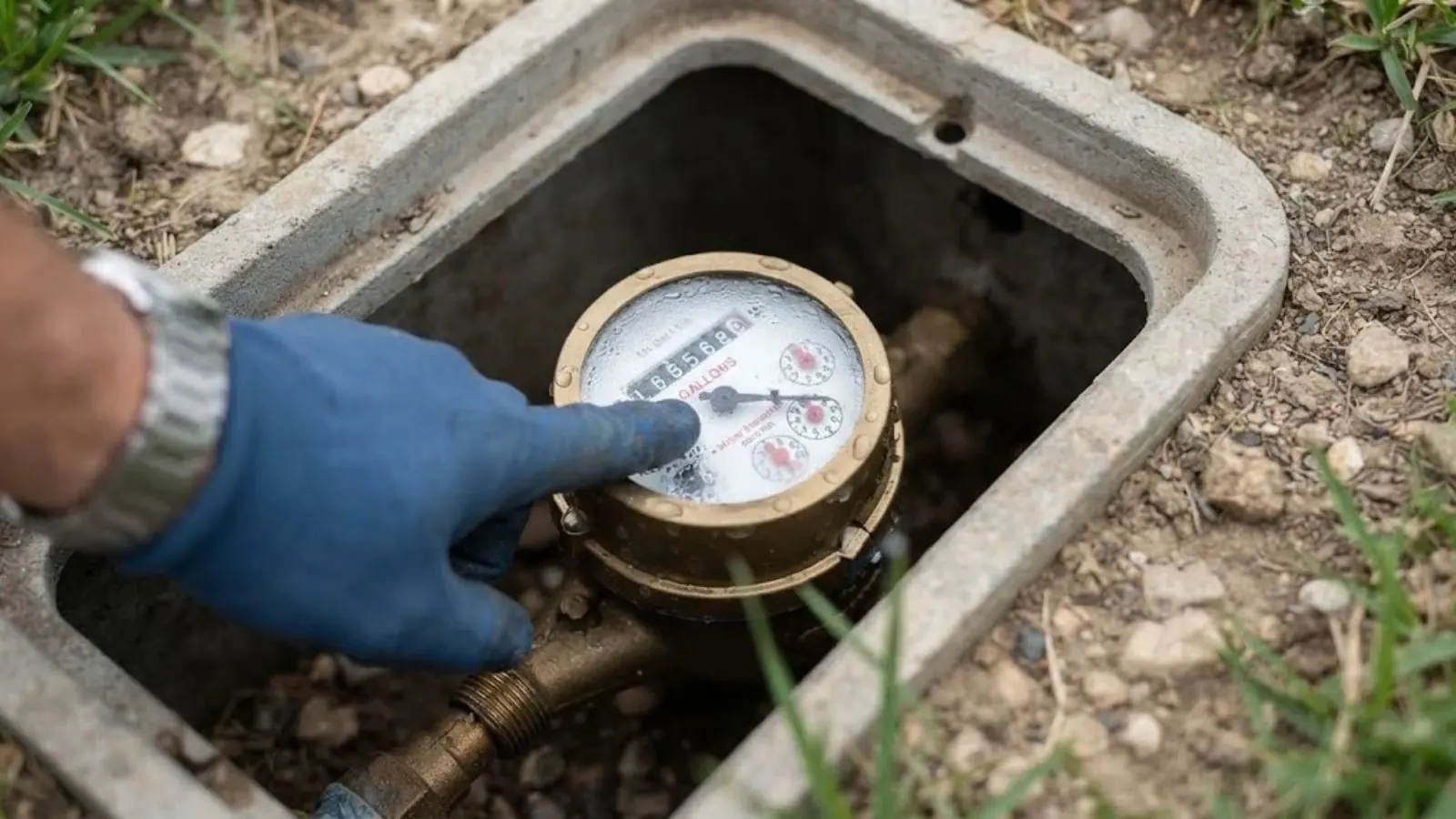
A high water bill in Bedford, TX usually has one of three causes: a leak, extra use such as new irrigation or guests, or a billing error. The fastest way to tell is the meter test. Turn off every tap and appliance, then watch the meter. If it moves, water is leaving the system and you have a leak.
Toilets and irrigation account for many household leaks. A toilet flapper that does not seal can waste many gallons a day without any sound. A sprinkler valve stuck open can do the same outdoors. Those are worth checking before you call a plumber.
The meter test
Turn everything off
Close taps, stop the washer and dishwasher and make sure no one is using water.
Find the meter
It is usually in a box near the street. Lift the lid carefully.
Read the low-flow indicator
Most meters have a small dial or triangle that spins at even a slow leak.
Record and wait
Note the reading, wait an hour with no water use and read it again.
If the reading changes, there is a leak. Next, close the main valve at the house. If the meter stops, the leak is inside the house. If it keeps moving, the leak is in the buried line between the meter and the house.
Check the usual suspects
Toilets
Put a few drops of food coloring in the tank. If color shows in the bowl without a flush, the flapper leaks.
Irrigation
A stuck valve or a broken head can run for hours. Turn the system off and retest the meter.
Dripping faucets and hose bibs
A drip fills a lot of gallons over a month. Check outside spigots too.
Water heater relief valve
A pipe dripping from the relief valve discharge can mean high pressure or a failing valve.
Meter moving with everything off?
Describe it and a plumber can plan the search.
Hidden leaks
If the meter moves and the usual suspects check out, the leak may be in a wall, a ceiling or under the slab. Warm spots on the floor, damp patches and the sound of running water are clues. A plumber uses acoustic listening devices, pressure tests and thermal imaging to locate it.
Bedford tools and who to ask
The City of Bedford's Water Billing page links an EyeOnWater sign-up for tracking usage and lists contact details for utility billing. It reports that the division handles more than 14,000 accounts monthly. A usage graph can show whether a leak started on a particular day.
For questions about a bill, the billing office lists weekday hours. For leaks inside your home, a plumber is the right call.
Source: City of Bedford Water Billing page (bedfordtx.gov/203).
| Meter result | Meaning | Next step |
|---|---|---|
| Moves with everything off. | A leak somewhere. | Close the main and recheck. |
| Stops after closing the main. | Leak inside the house. | Check toilets, then call a plumber. |
| Still moves after closing the main. | Leak in the buried line. | Call a plumber for line testing. |
| Does not move. | No leak now. | Look at use and irrigation. |
Ask about the bill
If the meter holds still and the bill is still high, the cause may be use. Irrigation in dry weeks can double a household's consumption. If you still think the bill is wrong, ask the utility billing office to check the meter reading and the billing period.
Keep notes. Dates, readings and photos help the city and any plumber understand what changed.
Reading a bill like a detective
Compare the current bill with the same month last year and with the last two months. A winter bill that doubles is more suspicious than a summer bill that rises because of irrigation. Look at the usage figure, not just the dollar total, because rates and fees can change the total without any change in use.
Check the billing period too. A bill that covers a longer period than usual will show more use. If the figures look wrong, ask the utility billing office to confirm the meter read.
Where the water usually goes
| Cause | How to check | Typical fix |
|---|---|---|
| Irrigation. | Turn off the system and retest the meter. | Repair the valve or head, adjust the schedule. |
| Toilet leak. | Dye test in the tank. | Replace the flapper or fill valve. |
| Dripping fixture. | Look and listen at every tap and hose bib. | Replace washers or cartridges. |
| Hidden pipe leak. | Meter moves with everything off. | Call for leak detection. |
Work through the list from easiest to hardest. Most households find the cause in the first two rows.
Setting up an early warning
The best protection against a surprise bill is a habit of checking. Read the meter on the first of each month and write it down. A jump in daily use is easier to spot than a jump in a monthly total. The EyeOnWater sign-up linked from the city page can make this easier by showing use over time.
A smart leak sensor under the water heater, behind the toilet and beneath the kitchen sink costs little and sends an alert when water appears. It is not a replacement for a meter check, but it catches the slow drips that bills reveal too late.
Do not ignore a small, steady rise. A leak that adds only a few gallons a day will not shock you in the first month, but it adds up over a year. A reading on the first of each month takes less than a minute and catches the slow ones.
Next steps
To find a hidden leak, see leak detection. A leak in the buried line is covered under water line repair. If a pipe has burst, go straight to burst pipe repair.
The same plumbers serve Hurst.
High water bill questions
A bad flapper can waste many gallons a day. A food coloring test in the tank shows whether it leaks.
It is usually in a box near the street or the property line. Lift the lid carefully, since insects can be inside.
The utility can discuss billing and usage. Finding a leak in the house is a plumber's job.
A leak that is under pressure shows as movement with everything off. A very slow drip can be hard to see.
Rarely the bill itself. Policies may cover resulting damage. Ask your agent.