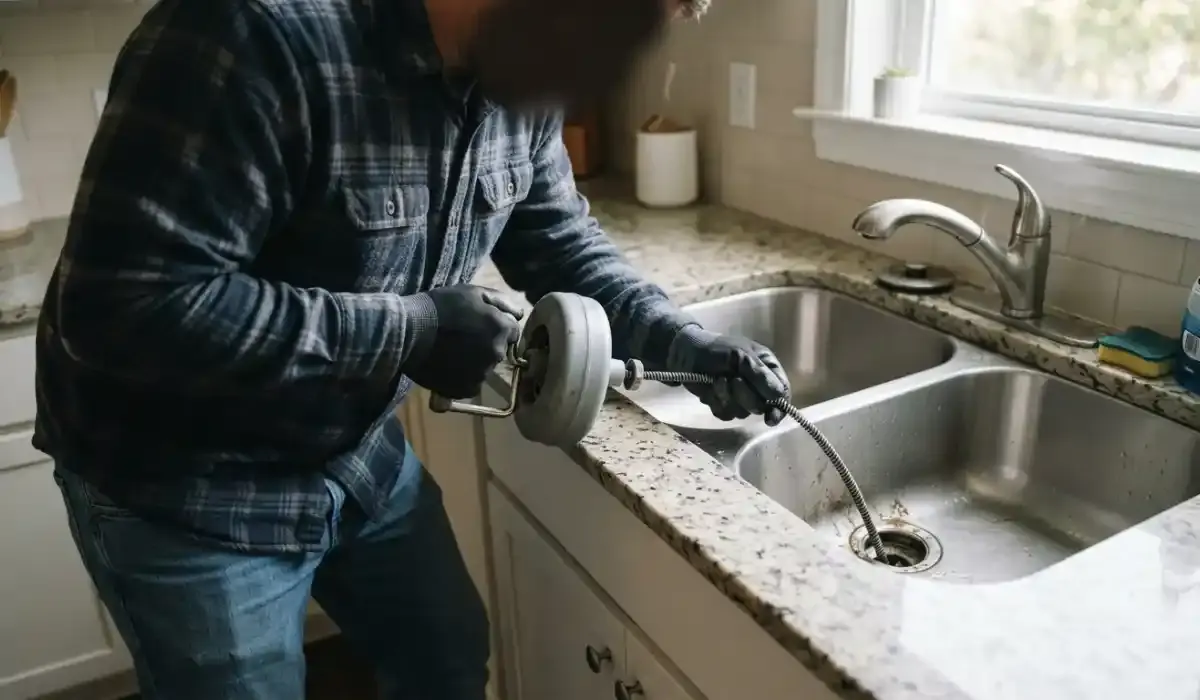
A kitchen sink clogged by grease needs the grease removed from the pipe wall, not just poked through. For a mild clog, a plunger and a few rounds of hot water with dish soap can help. For a stubborn one, a plumber uses a cable and, if grease coats the pipe, a hydro jetter. Avoid chemical cleaners, which can damage pipes and hurt whoever works on the drain next.
Grease is liquid when you pour it and solid in the pipe. It cools, sticks to the wall and collects food bits and soap. Over months the pipe narrows until water barely passes. The sink drains more slowly, then not at all.
What you can try
Stop using the sink
Every added gallon makes the backup worse.
Plunge
Use a cup plunger with enough water to cover the cup. If you have a double sink, block the other drain.
Use hot water and soap
Run hot tap water and dish soap in stages. Do not pour boiling water into a PVC trap.
Clean the trap
Place a bucket and unscrew the trap under the sink to remove the clog.
If water drains after you clear the trap, the blockage was local. If it does not, the clog is farther down the line and needs a cable.
When to call a plumber
Both sides of the sink are blocked
The clog is past the trap.
Other drains are slow
The branch or main line may be involved.
It keeps returning
Grease coating needs cleaning, not just clearing.
Gurgling or smell
Air is moving through a partly blocked line.
Cabling
- Opens a path through the clog.
- Quicker and lower cost.
- Leaves some buildup on the wall.
- Good first step.
Hydro jetting
- Cleans the whole pipe wall.
- Best for grease.
- Needs sturdy pipe.
- Often follows a camera check.
Kitchen sink still blocked?
Call for a cable, a jetter or a camera check.
How to stop it from coming back
Habits that prevent grease clogs
- Wipe pans and plates into the trash before washing.
- Pour cooled grease into a can and put it in the trash.
- Use a sink strainer to catch food scraps.
- Run hot water for a few seconds after washing greasy dishes.
- Have the line cleaned if it slows repeatedly.
Bedford utility and trash notes
The City of Bedford's Water Billing page covers water, sewer, solid waste and recycling billing, and its website has a trash and recycling page. Check it for guidance on what goes in the trash and the recycling and what should stay out of the sewer.
Restaurants have their own rules about grease. If you run a food business, ask the City of Bedford what applies to your property.
Source: City of Bedford Water Billing page (bedfordtx.gov/203), City of Bedford trash and recycling page.
| Symptom | Likely cause | Next step |
|---|---|---|
| One side slow. | Local trap clog. | Plunge, clean the trap. |
| Both sides blocked. | Clog past the trap. | Cable the line. |
| Repeats within weeks. | Grease coating. | Hydro jetting. |
| Other drains slow. | Branch or main line. | Cable or camera. |
A plumber can explain which situation you have. If the same line has clogged more than once, ask for a camera look. It shows whether grease alone is the cause or whether the pipe is damaged.
What happens inside the pipe
Grease enters the drain as a hot liquid and cools as it moves away from the sink. By the time it reaches the cooler pipe in the wall or under the slab, it sets as a waxy coating. Soap and food particles stick to it, and each wash adds another layer. The opening shrinks quietly until one day it closes.
That is why a line can look fine for months and then fail all at once. It is also why a quick cable pass can open the line but leave a thin channel that clogs again in weeks.
Why dish soap and hot water only go so far
Dish soap breaks grease into smaller droplets, and hot water keeps it liquid long enough to move. That helps a mild coating near the trap. It does not remove a thick layer farther down. Do not pour boiling water into PVC pipes, which can soften at high temperatures.
If you have tried a plunger and hot soapy water twice with no lasting improvement, stop and call for a cable or jetter. Repeating the same fix wastes time and water.
Commercial kitchens and larger lines
A home kitchen sends a few pans a day into the drain. A restaurant sends many times that. Commercial kitchens use grease interceptors and scheduled cleaning to keep fats out of the line. If you run a food business, ask your plumber about interceptor service and a jetting schedule.
A stoppage during service costs far more than a scheduled cleaning. Regular maintenance is the cheaper path, and a camera pass after a few cleanings shows whether the line is staying clear.
Apartment owners face a similar problem. Shared kitchen lines collect grease from several units, and one tenant's habit becomes everyone's backup. A yearly cleaning is a sensible default.
What a plumber will do on arrival
The plumber starts with the trap and the nearest cleanout. If the clog is shallow, a hand auger clears it. If the sink drains slowly after clearing, the plumber runs a cable farther down the line and may recommend a camera or a jetter to see and clean the pipe wall.
You should leave with a clear explanation of what was found, what was done and what to change. If the plumber found grease, expect advice on disposal habits. If the plumber found damage, expect a repair quote and a video.
Ask whether the line is likely to clog again and what the plumber would do to stop it. An honest answer is more useful than a promise.
Related pages
For the clog itself, see drain cleaning. Stubborn grease belongs with hydro jetting. If the disposal is involved, see garbage disposal repair.
We also serve Hurst.
Kitchen drain questions
Hot water can move grease along, but it cools further down the pipe and hardens again. It helps mild clogs only.
Chemical cleaners can damage pipes and are a hazard for plumbers. Try a plunger and call for more help.
Cooking grease and food scraps are heavier than bathroom waste.
No. It moves grease down the line where it hardens.
Many do on a schedule. See our commercial plumbing page.