Repiping in Bedford, TX replaces the water supply lines inside a house. It is a planned project that makes sense when pipes leak repeatedly, when water runs brown or when pressure has dropped because corrosion has narrowed the lines. It is not an emergency repair, though a burst pipe can start the conversation.
Bedford grew from about 2,700 residents in 1960 to around 50,000 today, so many homes date from the decades when galvanized steel, copper and, for a period, polybutylene plastic were common. Each material ages differently, and the one in your walls shapes the decision.
Signs your pipes may need replacing
Repeated leaks
Patching one pinhole leak and finding another within months suggests the whole run is wearing out.
Rusty or discolored water
Brown water from galvanized pipe means the inside is corroding.
Falling water pressure
Mineral and rust buildup narrows old pipes until flow drops.
Polybutylene pipe
Gray plastic pipe used in some homes from the late 1970s to the mid 1990s has a history of failures. A plumber can identify it.
Choosing the right pipe
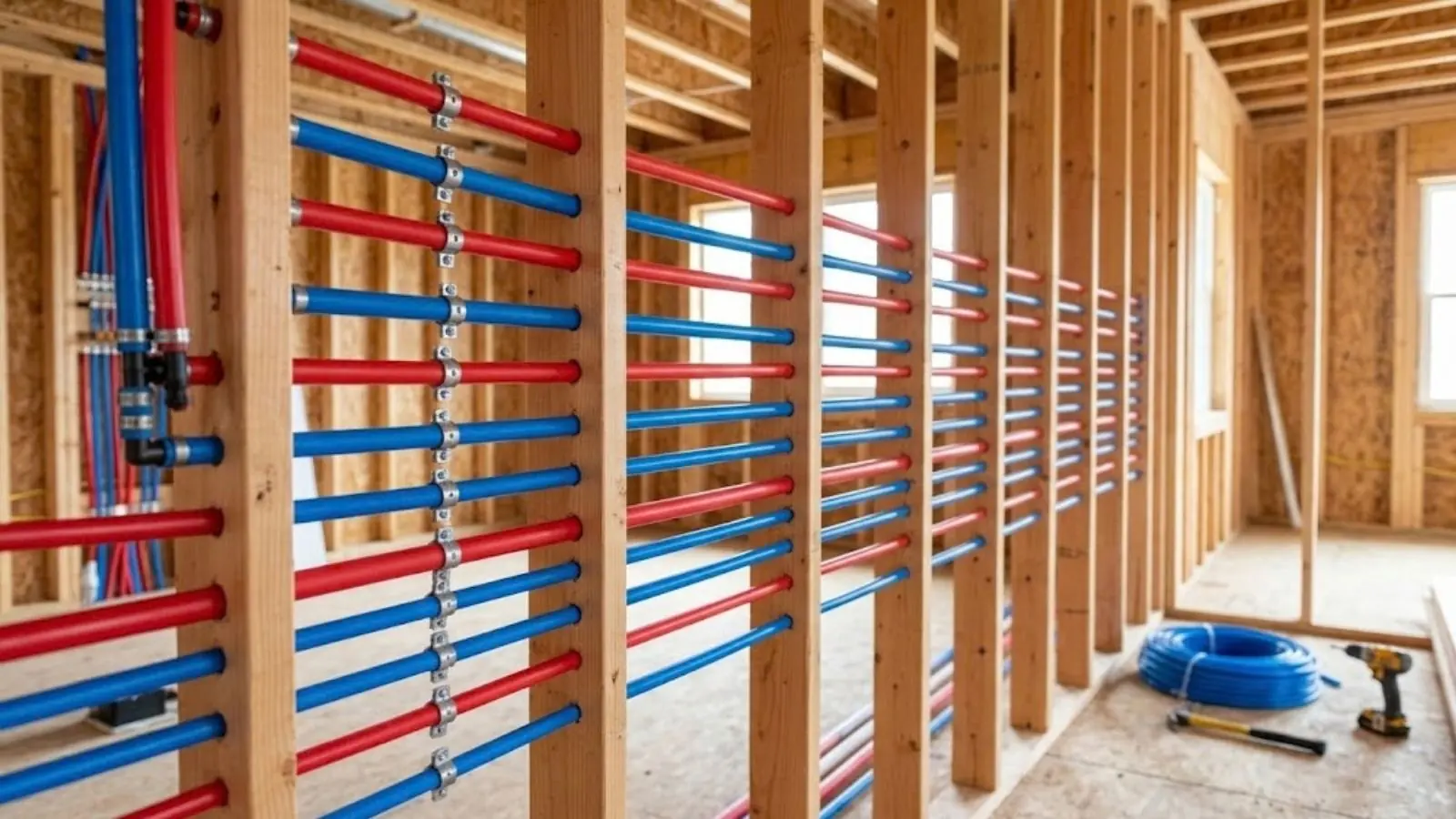
PEX is flexible, resists corrosion and can often be threaded through walls with fewer openings. Copper is durable and familiar, with a longer record in homes. The right choice depends on water chemistry, budget and how the house is built.
The City of Bedford's 2025 water quality report lists a pH of 8.8 and chloramine as the disinfectant. We do not claim a pipe material is immune to any water. We recommend a material based on the house and explain the tradeoffs.
PEX
- Flexible and quicker to install.
- Resists corrosion and scale.
- Fewer wall openings in many homes.
- Must be protected from sunlight.
Copper
- Long track record in homes.
- Handles heat and fire well.
- Takes more labor to install.
- Can develop pinholes in some conditions.
How a repipe works
Inspect
We check pipe type, access, pressure and fixture count.
Plan
You get a written price and a plan for the order of work.
Replace
New lines run to each fixture, with new shutoffs where needed.
Test and patch
We pressure-test, restore water and patch the access openings.
A whole-home repipe usually takes a few days, depending on the size of the house. The plumber explains the timeline and what to expect for water shutoffs and wall patching. Some homeowners choose to repipe in stages, replacing the worst zones first.
What decides the cost of repiping
What moves the price
Size and access matter most. A single-story house with open attic access costs less than a two-story with finished walls.
Insurance typically covers sudden damage and does not pay to replace worn pipe. Some home warranty plans cover pipe work. Read your terms before you rely on one.
Want your real number? Describe the job to the plumber on the 24/7 line and ask for a price before work starts.
Standards and codes behind the work
Supply lines are sized and installed under the plumbing code, and a repipe usually needs a permit and inspection. PEX and copper both carry standards for potable water use.
Want a repipe estimate?
Call and describe the pipe problems. A plumber can explain the options.
Related pages
If you are unsure the pipes are the problem, leak detection tests the system first. A single broken line may only need burst pipe repair. For lines under the floor, see slab leak repair.
The same plumbers serve Hurst.
Repiping questions from Bedford homeowners
Repeated leaks, discolored water and falling pressure are the main clues. A plumber can inspect the lines and explain whether a partial repipe would do.
Both work. PEX is flexible and quicker to install, while copper has a longer record. Your house and budget decide.
Many whole-home jobs take a few days, depending on size and access. The plumber gives a timeline before work starts.
Usually not. Water is shut off for stretches during the work, and we plan around your schedule.
Often yes. Ask the City of Bedford building inspections, and we can handle the paperwork with you.
Yes. Many owners start with the worst zone, such as a bathroom group, and do the rest later.