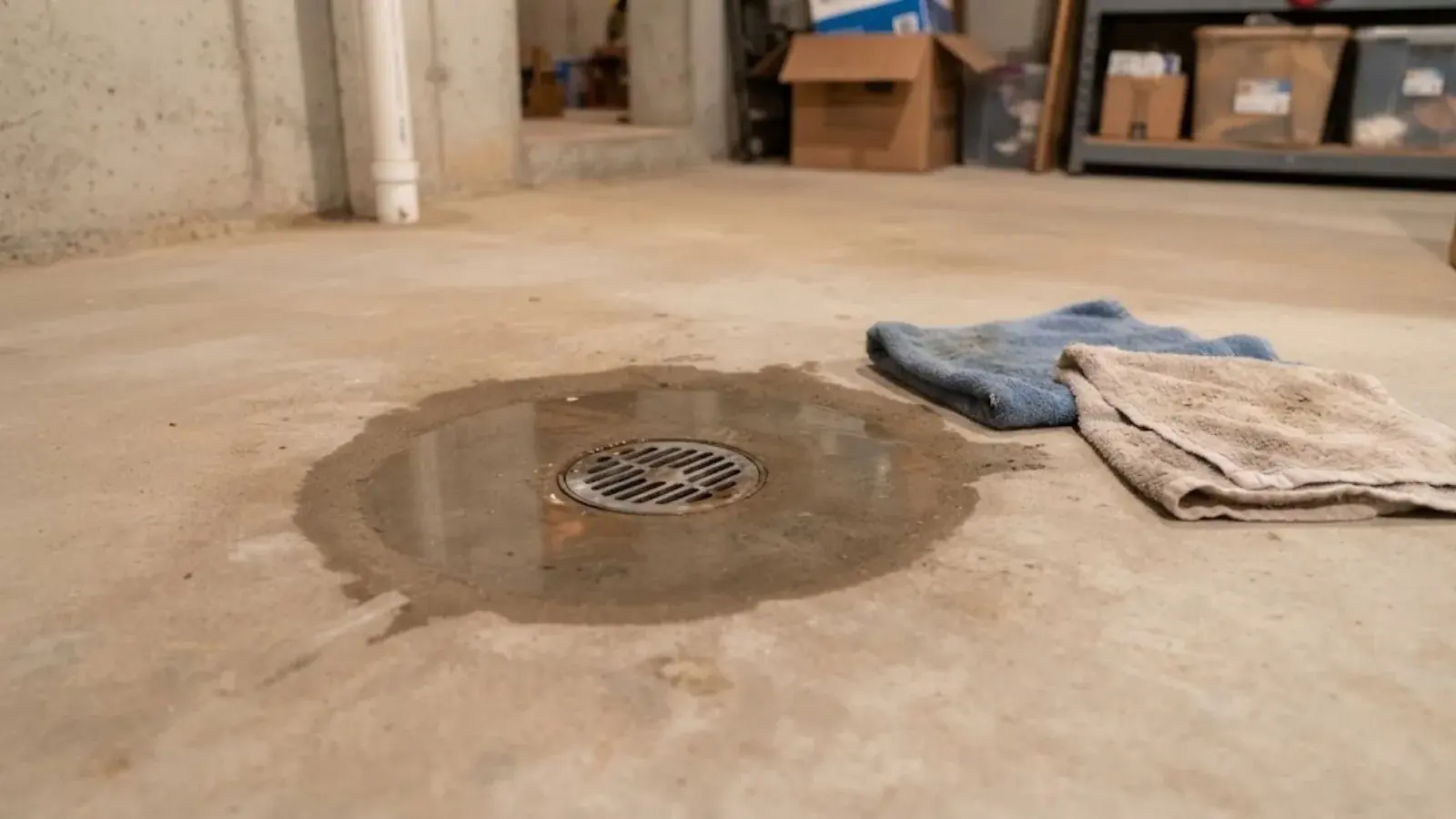
If sewage is coming up a drain in your Bedford home, stop using water immediately. Do not flush, run the washer or take a shower. Keep children and pets away from the affected area, avoid touching the water and call a plumber. A backup means the line is blocked or broken, and every gallon you add has nowhere to go.
The next steps depend on what caused the backup. A blockage in your own line is cleared with a cable or jetter. A broken pipe needs repair. A blockage in the city main in the street is a call to the city. A plumber can tell which you have, and a camera confirms it.
The first hour
Stop all water
No toilets, sinks, showers, washers or dishwashers. Tell everyone in the house.
Protect people
Keep children, pets and anyone with a weak immune system out of the room. Avoid skin contact.
Mind the electricity
If sewage is near outlets, appliances or the panel, leave those circuits off and do not wade through it.
Call a plumber
Give your address, the affected fixtures and whether sewage is on the floor.
Do not use chemical drain cleaners. They rarely clear a main line, can splash on whoever works on the drain and can damage some pipes.
Is it your line or the city's?
Several fixtures backing up together points to the main line. If the blockage is in the lateral on your lot, it is your responsibility. If it is in the city main in the street, the city handles it. A plumber can run a camera or cable through the clean-out to find out which side of the property line the blockage sits on.
A neighbor with the same problem is a clue, but not proof. Ask the plumber to show you what the cable or camera found.
Sewage coming up a drain?
Stop using water and call the line now.
Why sewers back up
Grease and wipes
Fat and wipes build up inside the pipe and catch debris.
Tree roots
Roots grow into joints and form a mat that stops flow.
Broken or sagging pipe
A crack, an offset joint or a low spot catches solids.
Heavy rain or a city main problem
High flow or a blocked main can push waste back toward homes.
Cleanup and insurance
Sewage is a health hazard. Cleanup should include disinfecting and drying, and large backups are best handled by a restoration company. Photograph everything before cleanup and keep records of the plumber visit and the cause.
Standard homeowner policies often exclude sewer backup unless you carry a specific endorsement. Call your agent early and ask what your policy covers. Do not throw away damaged items until you have documented them.
Who to call in Bedford
The City of Bedford's Water Utility Billing page lists a phone number and office hours for billing questions, and Public Works handles questions about the water system. Ask the city which department handles a blocked sewer main in your street, because the billing line is for accounts.
The same page lists a Water Meter Shut Off Assistance link and an online account system. Use them for billing and meter questions, not for emergencies.
Source: City of Bedford Water Billing page (bedfordtx.gov/203).
| Cause | Clue | Next step |
|---|---|---|
| Grease blockage. | Repeated kitchen backups. | Cable or hydro jetting. |
| Roots. | Slow drains that return. | Cutting roots, camera. |
| Broken pipe. | Wet yard, repeated backups. | Camera, repair. |
| City main. | Neighbors affected too. | Call the city. |
What to tell the plumber on the phone
Give the plumber a clear picture before the visit. Say which drains are backing up, whether sewage has reached the floor, whether it has happened before and whether you have a clean-out outside the house. If you know where the clean-out is, say so. If a neighbor has the same problem, say that too.
This helps the dispatcher decide what equipment to bring. A single slow tub is a different job from sewage in a floor drain, and a repeat backup in the same line points toward a camera visit.
Cleanup in the first day
After the line is cleared
- Wear gloves, boots and a mask if you handle contaminated items.
- Remove standing water and wet porous items such as rugs and cardboard.
- Disinfect hard surfaces with a suitable cleaner and let them dry fully.
- Run fans and open windows to dry the area.
- Keep photos, receipts and the plumber's report for your claim.
Large backups, or any backup that reached drywall, insulation or carpet padding, are better left to a restoration company. Moisture hidden in a wall can grow mold within days.
Preventing the next backup
Once the line is clear, ask the plumber what caused it. If it was grease, change what goes down the kitchen drain. If it was wipes, keep them out of the toilet and tell guests. If it was roots, ask about a camera visit and a plan for cutting or lining the pipe. A backup with no stated cause is likely to return.
Consider a backwater valve if your home has a history of backups from the city main. A plumber can explain whether one fits your plumbing and whether it needs a permit. It is a one-way valve that helps keep sewage from flowing back into the house.
If you rent, tell the landlord at once and send the message in writing. Ask who is responsible for cleanup and for the plumber. Keep your own photos, because the first day's damage is the clearest evidence of what happened.
One last point on timing. A backup that happens at night can feel like it should wait for morning. It should not. Sewage left in a house soaks into drywall and flooring, and every hour adds to the cleanup. Call the 24/7 line, stop using water and let the plumber decide how fast to move.
Related pages
For the fix, see sewer line cleaning and sewer line repair. A camera pass through sewer inspection shows what the pipe looks like.
We serve Hurst too.
Sewer backup questions
Yes. Raw sewage is a health risk and damages floors quickly. Stop using water and call.
Avoid chemical cleaners on a main line backup. They rarely help and add a hazard for the plumber.
Often only if you carry a sewer backup endorsement. Ask your agent and document the damage.
You are responsible for the line on your lot. The city handles the main in the street. A camera shows where the blockage is.
It depends on how much sewage reached the house. Large backups need professional cleaning and drying.