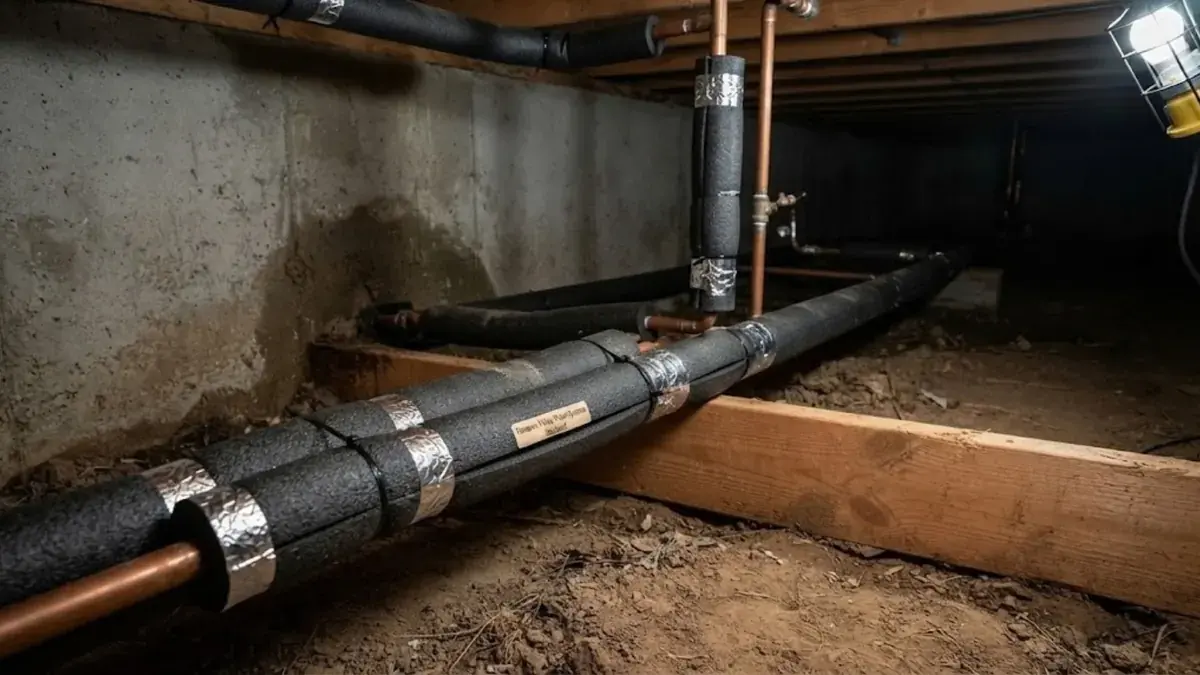
To prevent frozen pipes in a Bedford, TX home, insulate pipes in attics, garages and exterior walls, cover outdoor faucets, keep indoor heat on and let a faucet drip during a hard freeze. Know where your main shutoff is. If a pipe freezes and bursts, shut off the water at once and call a plumber.
Freezes of that severity are not common in North Texas, so many homes have little insulation. The February 2021 winter storm showed how many homes across the region lost water or had pipes burst when temperatures stayed low for days. A short hard freeze can do the same damage.
Which pipes freeze first
Attic supply lines
Pipes in an uninsulated attic see the full cold with no heat from the house.
Garage and exterior wall pipes
A water heater or laundry on an outside wall is exposed on one side.
Outdoor faucets and sprinkler lines
Hose bibs and irrigation backflow devices sit in the open air.
Pipes under pier-and-beam floors
Where they exist, crawl space lines can freeze when vents are open.
Before a freeze
Insulate exposed pipes
Foam sleeves on attic, garage and exterior wall pipes slow heat loss.
Cover outdoor faucets
Foam hose bib covers are cheap. Disconnect hoses first.
Protect the irrigation system
Shut it off and drain what you can. Cover the backflow device.
Locate the main shutoff
Make sure everyone in the house knows where it is.
On the night of a hard freeze, open cabinet doors under sinks on exterior walls so warm air reaches the pipes. Let a faucet drip, preferably one served by an exposed line. Keep the heat on, even if you are away.
Pipe already split?
Shut the main and call for a repair.
If a pipe freezes
If water stops flowing, a pipe may be frozen. Open the faucet and warm the pipe slowly with a hair dryer or warm towels. Never use an open flame. If you see frost on the pipe or a bulge, call a plumber. Thawing can reveal a split that only leaks once the ice melts.
If water is already pouring from a burst pipe, shut the main valve first. Open a low faucet to drain the line and turn off power to wet areas if you can do so safely.
Bedford utility and weather notes
The City of Bedford's Water Billing page links an EyeOnWater sign-up for tracking usage. After a freeze, a usage graph helps you spot a hidden leak that started when pipes thawed.
Check the City of Bedford website for current guidance during a freeze, including any notices about water service. Winter storms can stress utilities as well as homes.
Source: City of Bedford Water Billing page (bedfordtx.gov/203), February 2021 winter storm is widely documented.
| Where | Action | When |
|---|---|---|
| Attic and garage pipes. | Insulate with foam sleeves. | Before winter. |
| Outdoor faucets. | Disconnect hoses, add covers. | Before a freeze. |
| Cabinets on exterior walls. | Open doors overnight. | During a freeze. |
| One faucet. | Let it drip. | During a hard freeze. |
After the thaw
Check ceilings, walls and floors for wet spots, and watch the meter once the water is back on. Frozen pipes can split without leaking until they thaw. If the meter moves with everything off, you have a leak.
Protecting the parts people forget
Irrigation systems are the most common victims of a North Texas freeze. The backflow preventer above ground can crack, and the exposed pipe leading to it can split. Wrap the backflow device in an insulated cover made for the purpose and shut off the supply to the system before the freeze.
Pool equipment, outdoor kitchens and detached garages with a sink or washer also have lines that can freeze. Drain what you can and close the supply. If you are not sure how to winterize a particular system, ask the installer.
If the water goes out and comes back
When utility service is interrupted during a hard freeze and then restored, pressure surges can find weak pipes. Open a faucet slowly when water returns, check for leaks at ceilings and walls and look at the meter with everything off. A hidden split often shows up an hour after service is restored.
If you find a leak, close the main and call a plumber. Plumbers are busiest right after a freeze, so a call early in the morning often gets a faster response than a call in the afternoon.
Insulation that actually helps
Foam pipe sleeves are inexpensive and fit most supply lines in an attic or garage. Seal the seams with tape and cover every elbow and valve, because exposed fittings lose heat fastest. Insulating pipes does not make them freeze-proof, but it buys hours, and hours often make the difference.
Seal air leaks around the places where pipes pass through walls and floors. A small gap can pull cold air straight onto a pipe. Caulk or foam can close it.
In a garage, a small heater with a thermostat can keep the space above freezing during the coldest nights. Use equipment rated for the space and never leave a space heater near stored items.
Remember pets, plants and people. During a hard freeze, check on neighbors who may not know how to shut off their water, and bring sensitive plants inside. Fill a few containers with water in case service is interrupted, and keep a flashlight and charged phone ready.
Write the freeze plan on one page and share it with everyone in the house. When the temperature drops, the checklist is faster than remembering.
If a pipe failed
For a split or burst line, see burst pipe repair. A hidden leak after a freeze belongs with leak detection. Homes with repeated pipe trouble may need repiping.
We also serve Hurst.
Frozen pipe questions
Pipes can freeze when temperatures stay below freezing for hours, especially in unheated spaces. Wind and poor insulation make it worse.
During a hard freeze, a slow drip from one faucet can help keep water moving. It does not guarantee protection.
Slow warmth from a hair dryer is safe. Never use an open flame. If you see a split, call a plumber.
Often the resulting damage is covered, but policies vary. Document the damage and call your agent.
Shutting off the main and draining the lines can help for long absences. Ask a plumber about your setup.