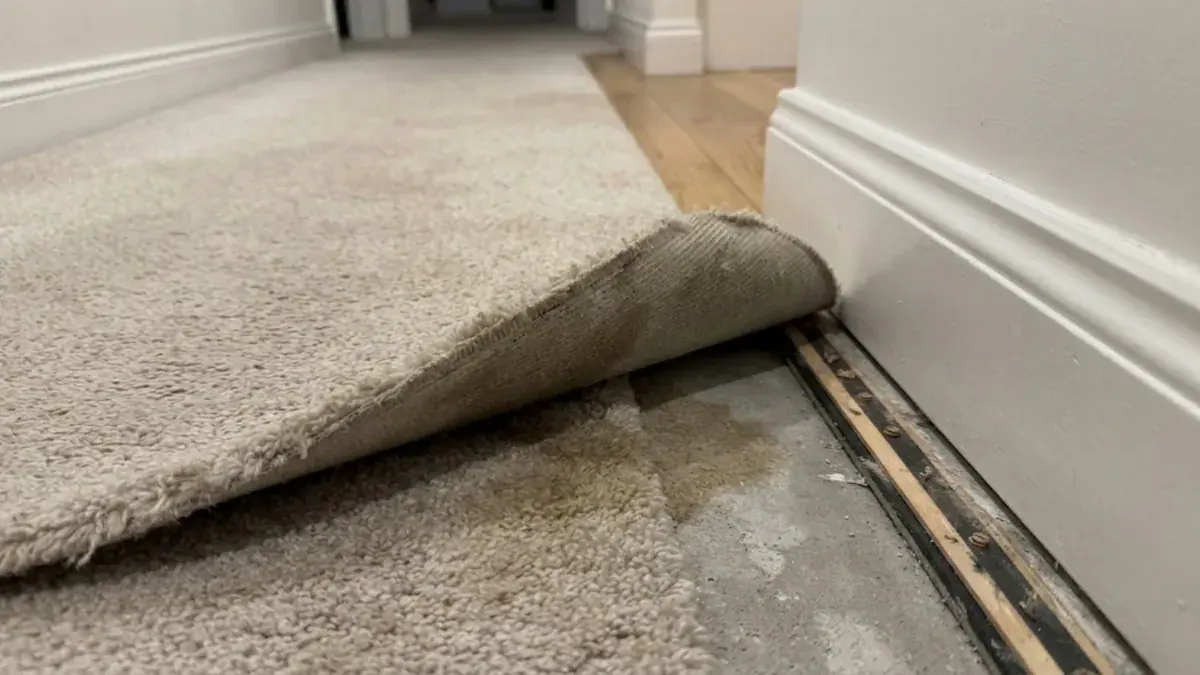
A slab leak usually shows up as a warm spot on the floor, the sound of running water, a meter that moves with everything off, a jump in the water bill or damp flooring. If you see one of these, close the main valve and watch the meter. If the leak stops, call a plumber for testing.
Many Bedford homes are built on slab foundations, so supply lines can run under or through concrete. A leak there is hidden. It is also the type of leak where early action matters most, because water can wash out soil and raise bills for weeks before anyone notices.
The signs, one by one
A warm spot on the floor
A leaking hot water line heats the slab. Bare feet find it before eyes do.
Running water sounds
A hiss or trickle when every fixture is off is a classic clue.
Meter movement
If the meter spins after you close every tap, water is leaving the system.
Higher bills
A steady rise without a change in habits suggests a leak.
Other signs include damp carpet, lifted wood flooring, cracked tile, a musty smell and low water pressure. Any single sign could have another cause. Two or three together make a slab leak more likely.
Simple checks
Watch the meter
Turn everything off and read the meter. Wait an hour and read again.
Close the main
If the meter stops after you close the house valve, the leak is on the house side.
Check the water heater
Turn off the heater and see whether the warm spot cools over several hours.
Mark what you find
Use painter's tape to mark warm or damp spots for the plumber.
If the meter keeps moving after you close the main, the leak is in the buried line outside the house, which is a different repair. See the water line repair page.
Warm floor or spinning meter?
Close the main and call for testing.
How it is found and fixed
A plumber uses acoustic listening, pressure tests and thermal imaging to narrow the leak to a small area. Repair choices include a spot repair through the slab, a reroute through the walls or attic and, in some cases, repiping. The right choice depends on where the leak is and the condition of the other lines.
Bedford housing and slab leaks
Bedford grew from about 2,700 residents in 1960 to around 50,000 today, according to a 2025 KERA News profile. Many homes date from the decades of growth, and older copper lines under slabs can develop leaks with age.
The City of Bedford's 2025 Water Quality Report lists a pH of 8.8 and chloramine as the disinfectant. Pipe wear depends on many factors, so ask a plumber about your home's pipe material and age rather than assuming.
Source: KERA News, August 22, 2025, City of Bedford 2025 Water Quality Report.
| Sign | Likely meaning | First step |
|---|---|---|
| Warm floor spot. | Hot line leaking. | Turn off heater, call plumber. |
| Meter moves. | Leak somewhere. | Close main and recheck. |
| Sound of water. | Pressurized leak. | Listen near walls and floor. |
| Musty smell. | Moisture under flooring. | Check for damp spots. |
What a leak can do before you notice it
Water under a slab does not disappear. It softens the soil, may lift the slab slightly and moves toward the lowest point. Over time it can stain floors, loosen tile and feed mold under flooring. The bill rises quietly, which is why many people learn about a slab leak from a letter and not a puddle.
A leak that runs for months can also add up to a very large amount of water. That is why a meter test is worth doing the moment you see one of the signs.
What to do and what not to do
While you wait for a plumber
- Close the main valve if the meter shows a leak.
- Photograph warm spots, damp flooring and the meter reading.
- Keep pets and children off wet or damaged flooring.
- Do not drill or cut into the slab yourself.
- Call your insurance agent and ask what documentation they want.
Do not ignore a warm spot because the water still works. A pinhole in a hot line can run for a long time before pressure drops.
Slab leak or something else?
A damp spot on a floor is not always a slab leak. A leaking dishwasher, a failed toilet seal, a roof leak running down a wall or a plant pot can all wet a floor. The meter test separates these. If the meter holds still with the house closed, the problem is not a pressurized supply leak.
A drain leak under a slab is another possibility. It does not move the meter. Instead, it can cause damp spots, odors and sunken areas, and a camera inspection of the drain line is how it is found.
That is why the first call is often a detection visit and not a repair. Knowing what you have means you pay for the right fix.
Talking to your insurer
Call early and ask what documentation is required. Many insurers want a plumber's report that identifies the cause and the location of the leak, photos of the damage and the meter readings. Some policies cover the cost of getting to the leak. Some exclude damage from a leak that has gone on for a long time.
Do not start repairs before the insurer has had a chance to look, unless water must be stopped. Stop the leak first, then document, then repair. A plumber can write a clear description of the cause that supports your claim.
Keep every receipt. Small costs add up and are easier to claim when they are listed.
Related pages
For the repair, see slab leak repair. To search the whole system, use leak detection. If several lines fail, read about repiping.
We also serve Hurst.
Slab leak sign questions
It can contribute to soil washout. A structural engineer should assess any visible foundation damage.
A warm spot suggests a hot line. A plumber isolates the lines to confirm.
Sometimes. A reroute can avoid it.
Often the resulting damage and access are covered, but not the pipe. Ask your agent.
Quickly. Close the main and call if the meter moves with everything off.